
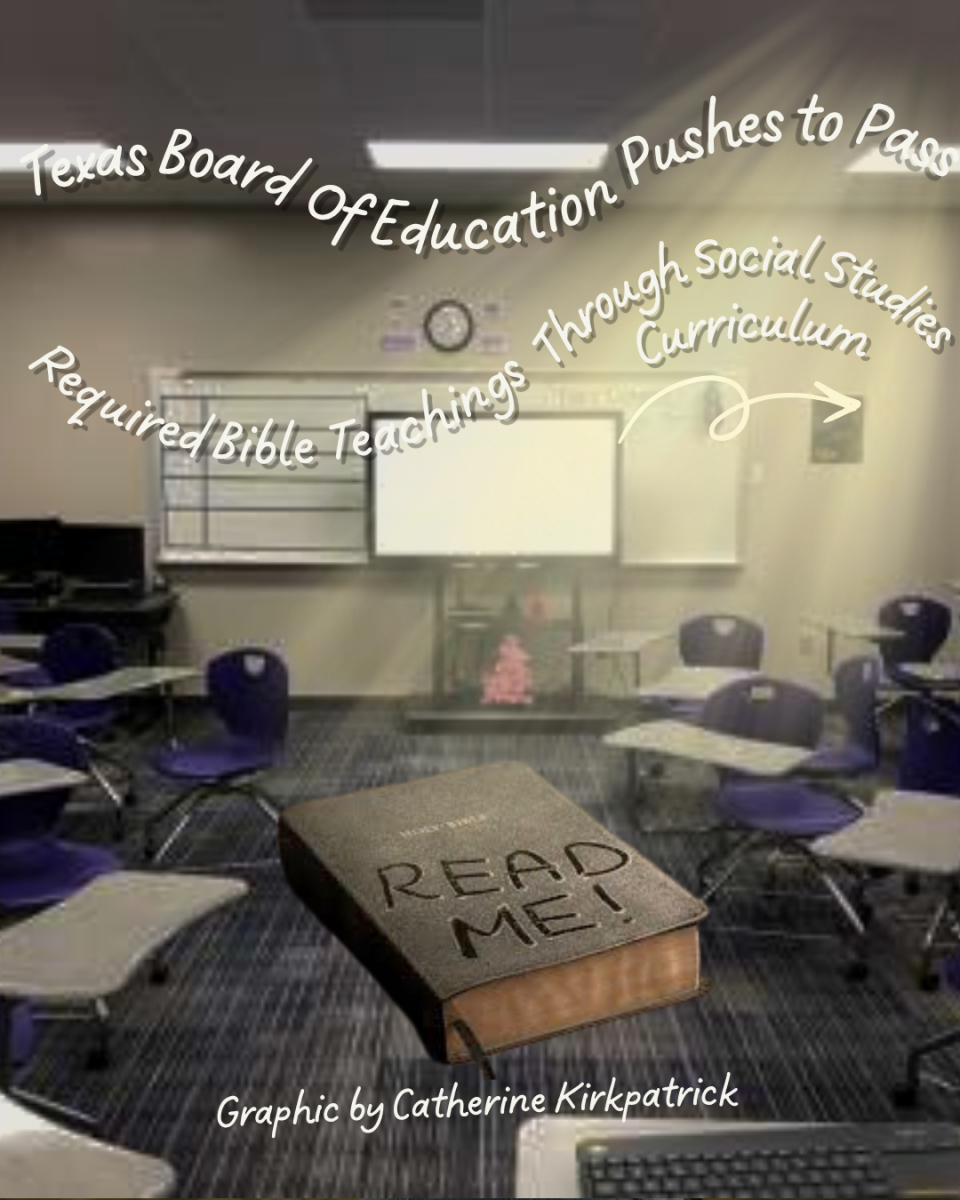
As of April 10, 2026, the Texas Board of Education moved from a processing status to the initial approval status of a mandatory list of books that all public schools will be required to teach as of 2030. The republican board voted 9-5 to approve the religious reading materials, with all 5 of the democratic party in disapproval.
The initial list included children’s books such as “Cat in the Hat” by Dr. Seuss, however, it slowly transitioned into more religious texts such as “The Parable of the Prodigal Son.” When the list was revised by Republican Keven Ellis, over 100 books were cut, but the religious texts still remained. Cain Newspaper Staff foresees several issues within the implication of religious texts, arguing for the dismissal of these required readings in a schooling-based environment.
“I’m sure my pastor father and my heavily christian family members would celebrate this, saying it gives a chance for educators to “spread the Word of God”…, but,…this is an awful requirement,” junior Savannah Echols said.
Supporters of the list believe that it will expand the knowledge of Christian values in public education, while the opposition finds that the new reading lists serves as an infringement on their First Amendment rights.
“As a Christian myself, I would love to [theoretically] say that having Jesus and the Bible in schools is a great decision, however that’s not the case,” Vannoy said.
Vannoy thinks that because of the Texas laws from earlier this school year, specifically regarding Senate Bill 12 under the Parents Bill of Rights that addressed nicknames and preferred names in schools, there is an increased restriction on who students are allowed to be.
“I think the education system has put so many rules in place that [present] offensive [topics] to people of different races, sexualities, age groups and much more, so why is [one about] religion accepted,” sophomore Emma Vannoy said.
The Texas Revised Reading List currently has books such as “The Parable of the Prodigal Son” and “The Road to Damascus” proposed as “read aloud” books to children in first through second grade.
“If I’m being honest, I think it is a bad idea if they do decide to push [these books] as many people who practice different religions would probably take their kids out of school and end up home schooling,” Senior Cade Nguyen said.
Books depicting controversial subjects are frequently banned in Texas school policies. Book bans, initially enacted in hopes to protect children, has now become a topic that is harming students from learning full concepts.
“This curriculum should not be passed because some people do not believe the religion …This can offend students and family, shift the way of education, and so much more. These issues, among multiple others, are [some] of the reasons that adding religion to education is harmful to our education system and the children involved,” Vannoy said.
Texas State Teaching Association finds that the books that are typically complained about don’t depict these “sexually explicit ideals”; however, they have images such as two mothers with their family.
“There’s already such turmoil between people and current governmental decisions, and this will only worsen it. Texas, especially Houston, is filled with a range of cultures, peoples, and religions. It’s one of the most beautiful things about our home, and this [list] threatens to overlook it,” Echols said.